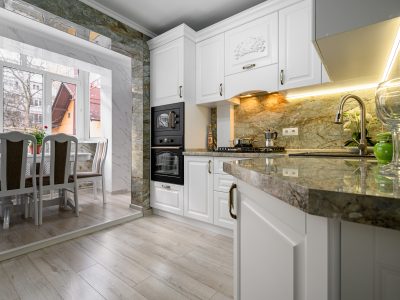
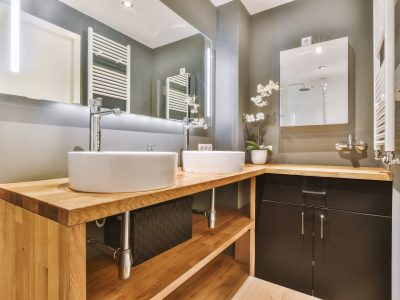
Are Marble Countertops Right for Your Kitchen? What to Consider Before You Choose
Choosing marble countertops is a decision about expectations as well as maintenance. Can you embrace a natural material that will show the effects of use?
If the prospect of marks from groceries, lemon juice, or dinner-party spills makes you cringe, you might not be a marble person. But if you are drawn to materials that will develop a patina over time, then marble might be perfect. And of course, bakers will enjoy that marble is naturally a cool, smooth surface and it is easy to work with on a counter.
What Makes a Marble Slab Appealing?
Marble is limestone subjected to heat and pressure, causing a change in the crystalline structure of the stone. The color, movement, and veining create depth that can be hard to appreciate in a small sample.
There are many variations of marble. Some are quite subtle, others very bold. There are whites, warmer colors, darker colors, and highly patterned marbles that will serve as the centerpiece of your kitchen. MSI’s marble overview shows examples of that variation.
While a sample or two in hand will be useful during your Greater Miami kitchen remodeling project, they do not represent the whole. Marble veining can range from subtle to dramatic. It’s important to look at whole slabs to see whether a dramatic vein might end up smack in the middle of your island or sink run.
Take the sample back home, lay it on the counter next to your existing cabinets, and look at it in the morning light and then again in the evening. Consider how it complements your floor and backsplash tiles. Sometimes a white marble will appear quite gray next to warm-toned cabinetry.
The Main Tradeoff: Stains, Etching, and Scratches
Will you like it or not? You may have heard that you’ll love the patina on your marble countertops. Whether that patina will charm you or annoy you is entirely up to you, and there’s no wrong answer. But you may want to educate yourself on what types of damage are most common in marble and get a feel for the look of aged marble before you invest.
Staining, etching, and scratching are the big three problems that can happen with natural stone. Staining happens when a substance penetrates the stone and causes discoloration. Etching happens when acidic substances react with marble and leave dull spots. Scratching is just abrasion to the stone. A common culprit in etching your marble is something as innocuous as vinegar or lemon juice.
The Natural Stone Institute provides marble care guidance at Use Natural Stone, its educational site. You can improve marble’s stain resistance with an impregnating sealer, but this does not prevent etching. And of course, using a cutting board will help to keep scratches and foodstuffs away from your countertops.
You might also check out images of weathered countertops before you make your investment. You could also find a sample of the stone and test it in your kitchen to get a feel for how you like the finish, especially in your lighting. Seeing an older counter is more useful than being told you’ll love the patina.
Honed or Polished Marble Countertops?
Polished marble can show scratches, etching, and stains from everyday use, including contact with cookware and acidic spills.
Some opt for honed (matte) marble counters. Etch marks may not stand out as much, although the finish doesn’t prevent them. Honed counters are still marble, and the finish will not stop etching or scratching.
Before making your final selection: Look at samples in different light, while sitting and standing. Flaws that you would see sitting next to a counter may be invisible while standing over the stone. It’s good to know what’s going on before the counters are in, not after.
Once counters are installed, changing the finish is a complicated task, depending on the layout of your counters. Check with a qualified stone professional about the feasibility and expense.
Stone International discusses the visibility of etching in its guide to marble kitchen countertops in daily use.
How Much Care Does Marble Need?
Marble has useful heat resistance, but use a trivet for hot pots and pans.
The Natural Stone Institute care guide explains the everyday precautions.
- Blot spills immediately, then clean, rinse, and dry the area as appropriate for your stone and cleaner.
- Use only pH-neutral, non-abrasive cleaners formulated for natural stone.
- Insist that everyone, from family members to cleaning help, uses only the appropriate products for the stone.
- Use cutting boards.
- An impregnating sealer improves stain resistance; it does not make marble stainproof or prevent etching.
- How often should your stone be sealed? There is no set time. It depends on the stone and product used. Check with your supplier.
A honed finish can make etch marks less noticeable than a polished finish, but you still have to pay attention to its care needs.
If your home is rented, or you regularly spill acidic beverages and leave them unattended overnight, you may be better suited for a lower maintenance counter.
Compare Marble With Granite, Quartz, and Quartzite
Think about what you’ll be doing at each location. It might make sense to have a marble countertop on your kitchen island, but another material by the sink or stove.
If you regularly slice lemons and limes or make tomato sauce, acid resistance deserves attention.
Do you drag your heavy appliances from time to time? Scratching may be an issue.
Think carefully about how you will use stone surfaces. For instance, marble on an island still encounters acids if that is where you prepare citrus or serve drinks. Marble can be an excellent choice for special uses or applications where it will have minimal contact with acids. Granite is usually more resistant to acid and abrasion than marble.
Stone types vary considerably even within a family such as granite, and their performance can be difficult to predict from appearance or trade name. Ask your stone supplier to make sure that the material is truly what it is advertised to be, and for information about how best to protect and care for the stone and for any particular limitations in its use. For instance, some types of granite are more porous than others and may need to be sealed. You should never bang heavy pots on granite or other hard surfaces. And you should use the correct products for cleaning and protecting your surface. Quartzite is a natural stone, not to be confused with quartz. True quartzite resists the common kitchen acids that etch marble, though its porosity and sealing needs vary. The Natural Stone Institute’s quartzite care guidance explains the distinction.
Quartz countertops
Engineered quartz offers marble-inspired designs without the fuss of sealing, but it still needs protection from excessive heat. Explore Stone International’s quartz countertop options if that tradeoff appeals to you.
Budget for the Finished Countertop, Not Just the Stone
Which is more expensive, granite or marble? Either one can be, depending on the material you choose and the associated labor costs. The best way to compare cost is to get written estimates from a fabricator/installer for the same scope and layout.
- Does the estimate identify the actual slab being supplied?
- Does the price include the specified thickness and finish, measurement, and fabrication?
- What about removal of old counters? If plumbing is involved, who makes sure the faucet/sink is reconnected to the plumbing?
- Who handles delivery and installation, and are both included?
- Other common line items are sink/cooktop cut-outs, edge profiles, backsplash, seam allowances, extra support structures, etc.
Until each line item is clear, it is difficult to compare totals. These are questions to ask, not assumptions about what an estimate includes.
Ask the fabricator to review the cut layout before cutting, so you know where seams fall, whether veining will run through the island, if there will be extra material needed for waterfall edges, etc. Also, keep in mind that more dramatic pieces may need extra layout attention, which can affect material use.
Make Your Choice Before You Reserve the Slab
The whole kitchen doesn’t have to use one material. You can mix surfaces to suit different work areas.
Marble is a wonderful countertop material. Just make sure you budget for the lifetime cost of ownership (e.g., professional refinishing, stain removal, etc.) and that your household enjoys the look of the material enough to accept visible patina, put up with more frequent maintenance, and agree that the beauty of the material is well worth the extra effort. For some, marble is their dream countertop, and for others, a product with fewer maintenance demands is a better option.
Stone International serves Greater Miami and offers countertop fabrication and installation. If you’re planning your kitchen update and have questions about the availability of materials, the layout of your dream kitchen, or how different countertops fit your everyday life, bring your cabinet samples and questions when you contact Stone International. Your kitchen should look amazing, but also stand the test of time when Monday morning comes.