Bathroom Cabinet Installation: A Complete Guide to Upgrading Your Bathroom Storage and Style
A bathroom that feels cramped and cluttered usually comes down to one thing: not enough smart storage. Swapping out old cabinetry or adding a new vanity can change the entire feel of the space, and it’s one of the more satisfying home projects you can actually finish in a weekend.
Stone International supplies solid wood bathroom vanities and cabinets directly to Miami-area homeowners and contractors, so whether you’re tackling the installation yourself or hiring a professional, starting with the right product makes the entire process easier.
How to Plan Your Bathroom Cabinet Layout: A Step-by-Step Guide
Before you pick up a drill, start by measuring carefully—and then measure again. It may be the most common remodeling advice you’ll hear, but it’s also the advice homeowners most often regret ignoring. You need to know how far the drain is from the wall. Check your supply line height. Make sure there’s enough room for the door to swing open, too. Few things are more frustrating than buying a beautiful vanity only to discover that your bathroom door no longer opens fully. If you plan on installing a wall-mounted cabinet above the vanity, be sure to measure your ceiling height as well.
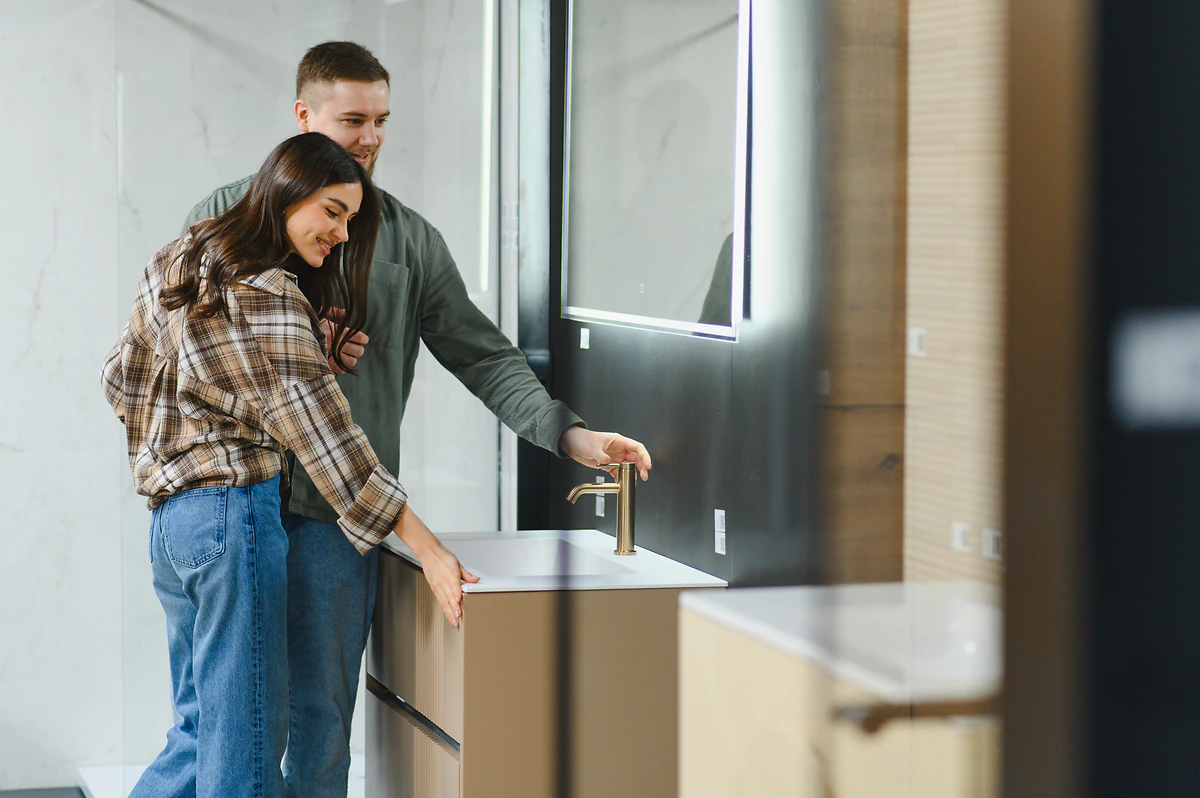
Sketch the room on a piece of paper and mark where the sink, toilet, and bathroom door are located. You’d be surprised how often that sketch can save you from buying something you absolutely love (but that won’t fit in your space). As you evaluate your options, consider the pros and cons of freestanding versus wall-mounted vanities. Each style comes with pros and cons that may influence which one works best for you. While wall-mounted cabinets can make a bathroom feel larger, remember that the vanity must be secured to proper framing—not just drywall. Be sure your vanity can attach to blocking or studs.
What You’ll Need to Get the Job Done
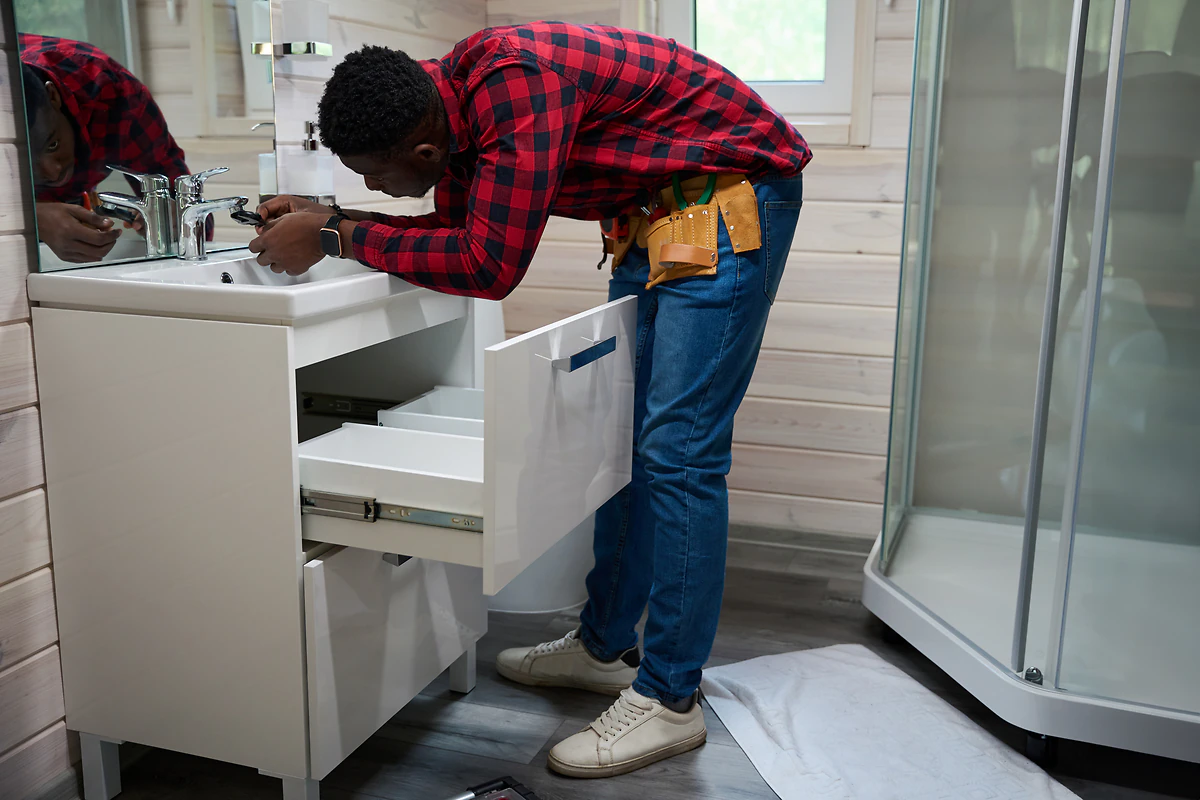
Get your tools in order before you remove that old vanity, so you don’t have to go searching for a stud finder in the hallway after the fact:
- Stud finder
- Level
- Drill
- Appropriate screws or anchors for your wall type
- Shims
- Utility knife to cut old caulk
- Adjustable wrench
- Plumber’s tape
The first step is to turn the water off at the shutoff valves below the sink. Disconnect the drain and supply lines and pull the cabinet away from the wall. Inspect the wall and floor, because the older cabinets you’re removing may have covered up water damage. You’ll find the water damage much sooner if you look now, rather than later.
Putting the Cabinet in Place
Mark your studs with some tape. If you have a wall-mounted vanity, each mounting screw needs to land either in a stud or a properly rated wall anchor. If you’re unsure where the studs are located or whether the anchors are properly rated, take time to verify before proceeding. Make sure your vanity is level in every direction before putting any screws in the walls.
Another detail homeowners often overlook is that floors are rarely perfectly level, especially in older Miami homes. Use shims until the cabinet is plumb, then fasten it to the wall. Don’t let an uneven floor throw off the entire installation. Now seal it. Apply caulk anywhere the cabinet meets the wall to help prevent moisture intrusion. Without a proper seal, moisture can work its way behind the cabinet and cause damage over time.
Once the cabinet is installed, put in the drainage assembly and reconnect the water supply. Tighten the connections by hand first to ensure they’re properly aligned, then finish tightening them with the appropriate tools. When you’re ready to turn the water back on, take your time and watch for leaks for at least a minute. If you miss a leak now, it can lead to significant water damage later. The one thing that usually surprises people is that you might need to make some modifications to the drain.
A new vanity can shift the drain position, requiring a drain extension or an offset. This is one of the most common installation challenges homeowners don’t anticipate. If at this point you’re uncomfortable making modifications yourself, call a plumber. It will be much cheaper than dealing with water damage.
Now install the hardware: handles, pulls, and knobs. This might be the last step, but it makes more of a visual difference than most people realize. Use a hardware alignment jig to install them with consistency and precision. Mark, drill, fasten. The steps are simple, but the precision matters. Few things stand out more than misaligned cabinet hardware. Good hardware alignment makes the whole thing look professional and well-designed.
That’s the whole job: plan, prep, install, finish. Done right, a new vanity transforms a bathroom in a single weekend.
Picking the right vanity is half the job. Stone International offers wholesale bathroom vanities and bathroom cabinets in Miami at direct import prices, so you get more for your money. We also offer installation. If you’d rather leave the installation to a professional, our team can handle the project from start to finish.